Disclaimer & Copyright Notices; Optimized for the MS Edge
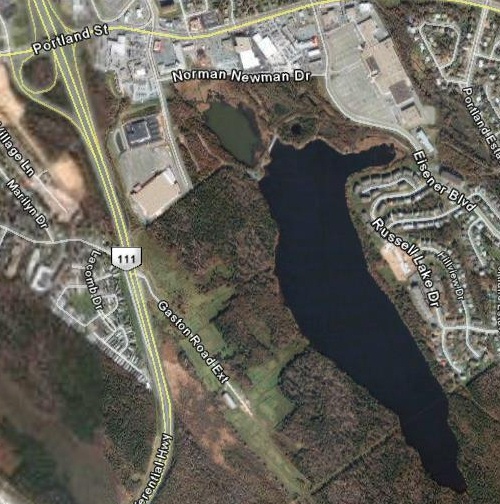
Russell Lake, Dartmouth
Soil & Water Conservation Society of Metro Halifax (SWCSMH)
Updated: February 15, 2020 
Caution: Since Russell Lake is a shallow lake, the standard limnetic (i.e., open-water) trophic parameters may not represent the true trophic status of the lake.
Acknowledgements
Contents:
Chemical vs Biological monitoring

Select scientific modelling and chemical/biological limnology are part of our miscellaneous archives
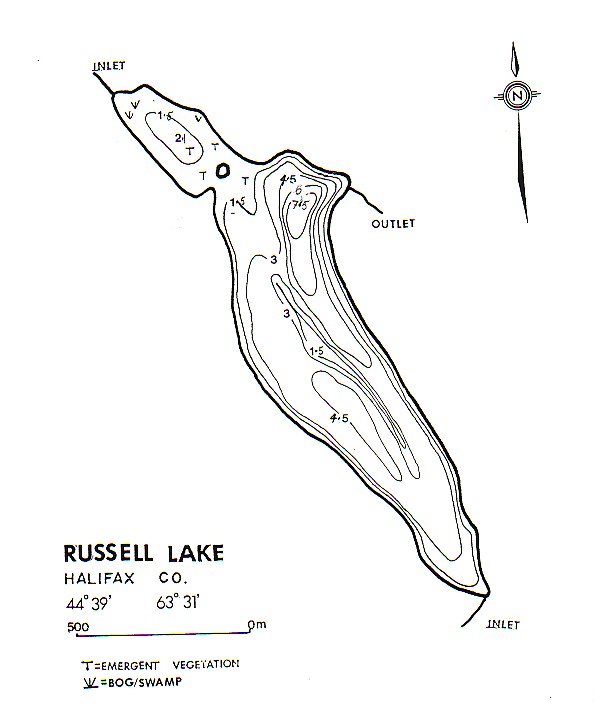
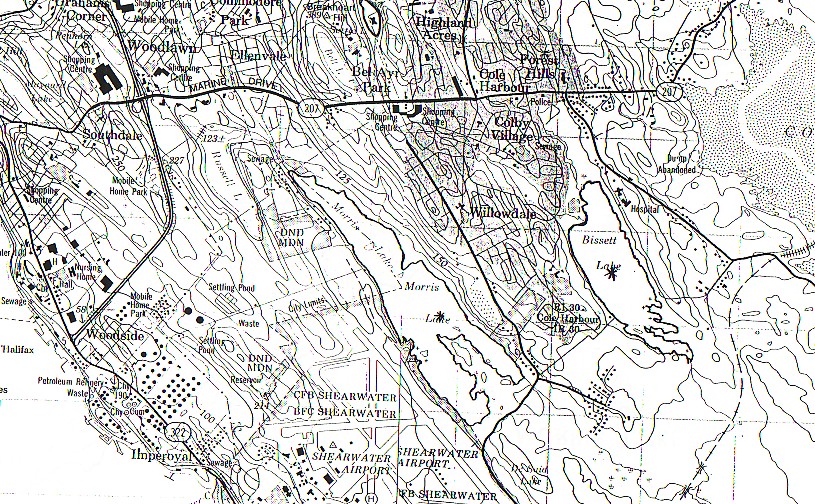
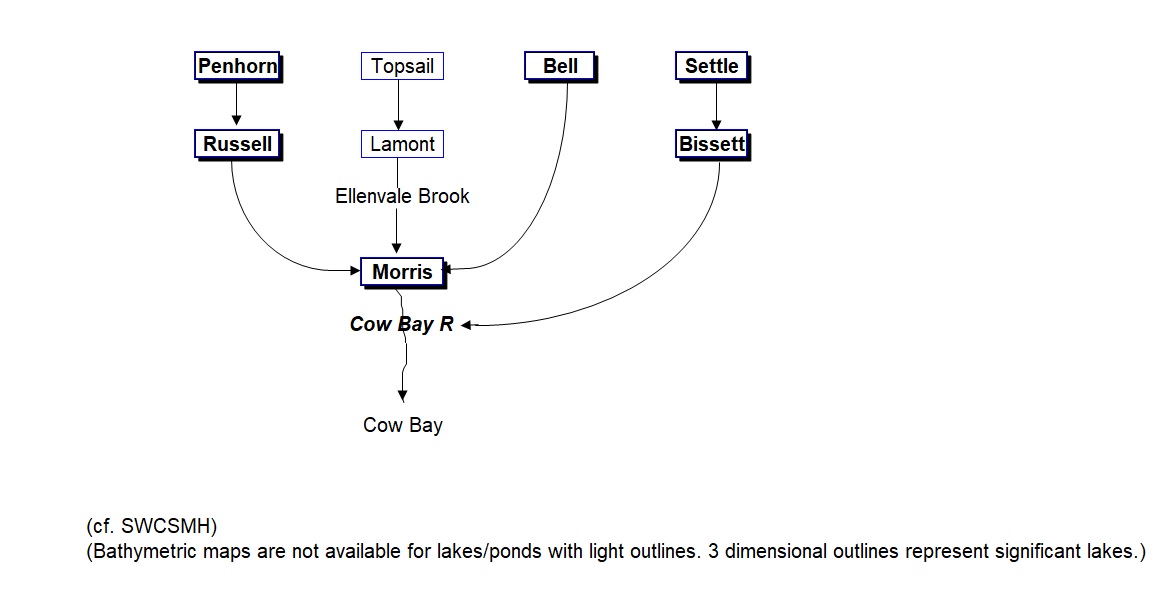
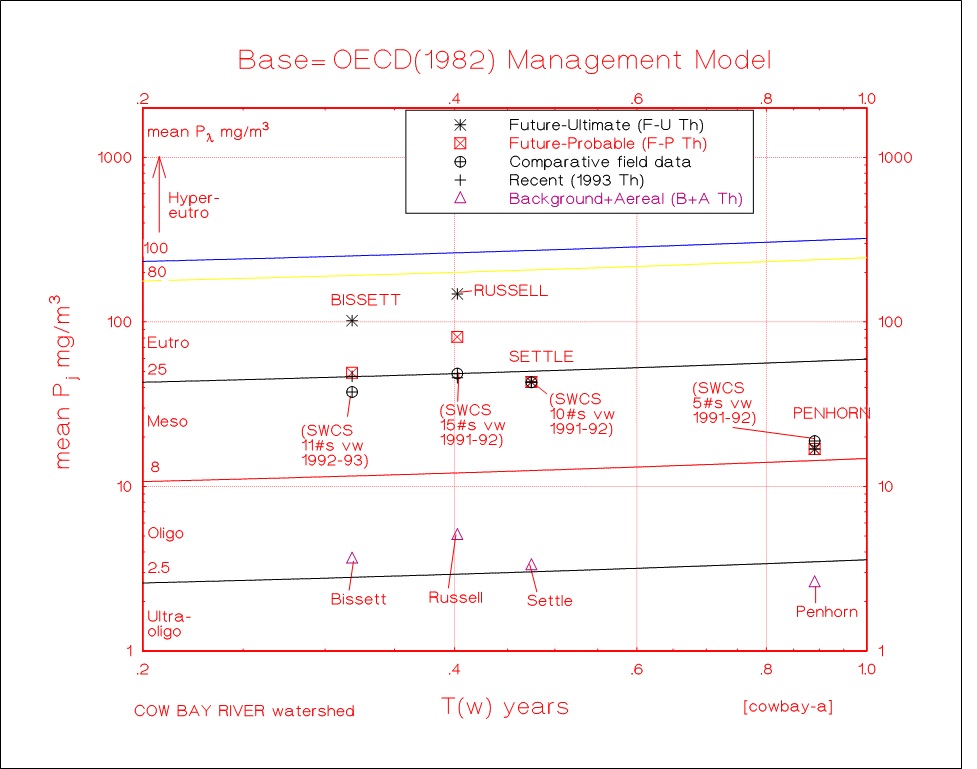
The bathymetric map; the morphological data; the location map; the Cow Bay River watershed flow chart; peruse our predictive modelling, and view a relevant model; the paleolimnology of lakes in the HRM; Excel archive data module
Deep station total phosphorus (TP)- comparison with our hindcast models; October 18, 2013
Phosphorus:- Details on LCC (Lake
Carrying Capacity)/Threshold values of lakes, and comparison with
artificially high values chosen by the HRM; March 14, 2014
- Russell Lake, Dartmouth-Paleolimnology results from an NSERC funded research project, 2000's-archives from our files; January 16, 2013
Total stormwater treatment recommended:
Total stormwater treatment should also include removal of other urban pollutants as well, not just phosphorus! The CDS technology, the Stormceptor, and the Vortechnics are superb devices for pre-treatment, but they have to be followed by sophisticated polishing systems, for example a scientifically designed wetland with the attendant maintenance in perpetuity. This combination may or may not work (see the note of caution).
A note of caution: There have been conflicting results in the long term removal of typical stressors in storm drainage
using constructed (or engineered) wetlands. Further, such wetlands have
not had a successful history in the amelioration of acid drainage in
HRM. Hence, the only sustainable methodology would be treatment of
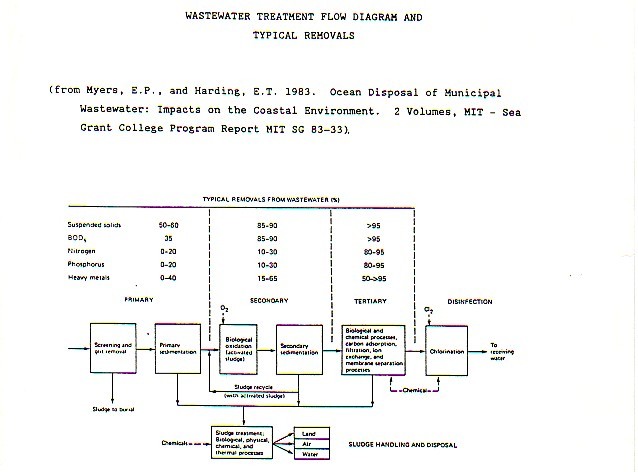
urban and suburban stormwater by traditional wastewater treatment plants (WWTP)
based on the tertiary removal process in the case of stressed lakes.
This implies considerable capital costs and operation & maintenance.
Concerns of stakeholders and Government agencies
- Major siltation problems during the mid-2000's at the rapidly recovering Russell Lake inspite of all the commitments made by regulators
- Developer told to prevent lake run-off, Chronicle Herald; July 18, 2006
- "I wouldn’t want to swim in that", Chronicle Herald; July 15, 2006
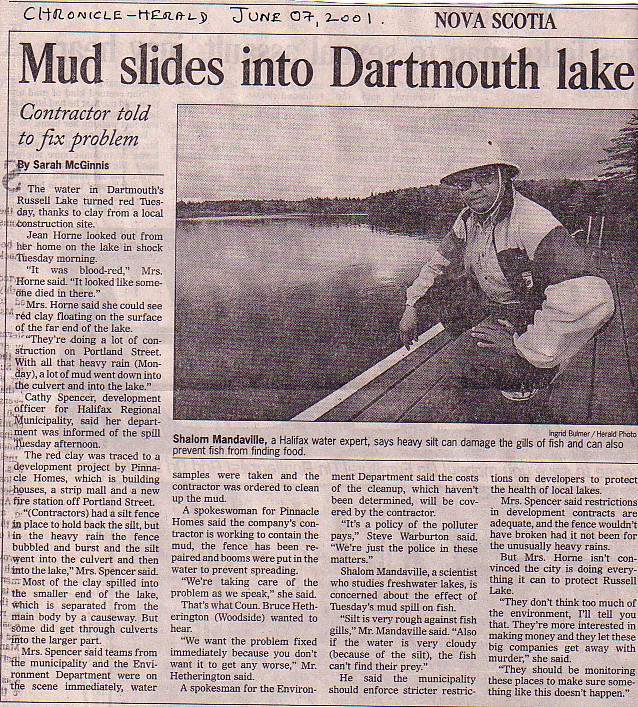
- Mud slides into Dartmouth lake, Chronicle Herald; June 07, 2001
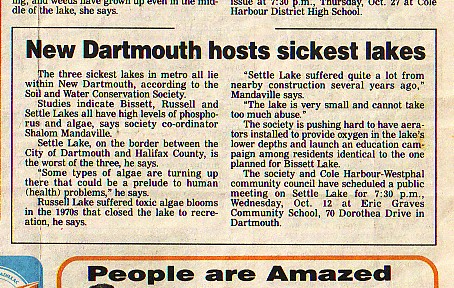
- Russell Lake among the worst, The New Dartmouth News; September, 15, 1994
- Further concerns of the Nova Scotia Dept. of Fisheries; July 22, 1991
- Nova Scotia Dept. of Fisheries expresses grave concerns in stocking Russell Lake with trout; July 09, 1991
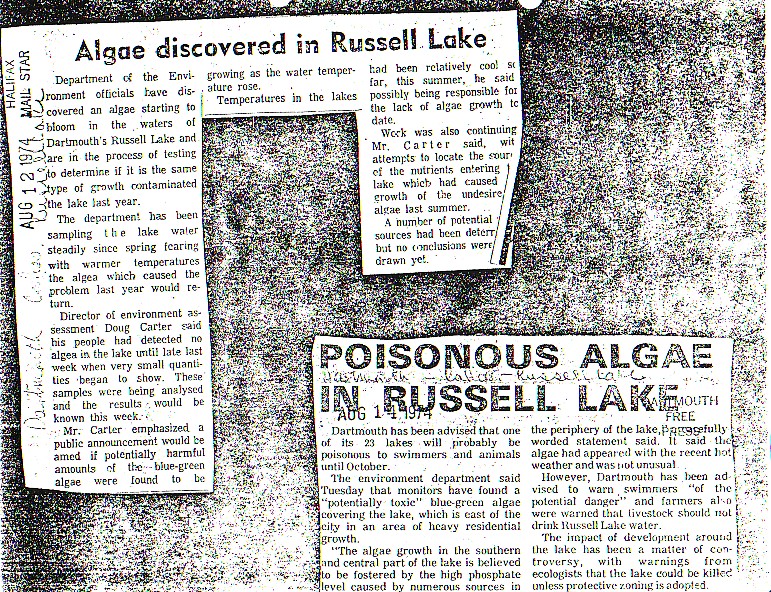
- Press Releases by the Nova Scotia Dept. of the Environment; August, 1974
Nova Scotia Dept. of Fisheries expresses grave concerns in stocking Russell Lake with trout; July 09, 1991:
![[Img-hill1_1.jpg]](PIC/hill1_1.jpg)
![[Img-hill1_2.jpg]](PIC/hill1_2.jpg)
Further concerns of the Nova Scotia Dept. of Fisheries; July 22, 1991:
![[Img-hill2_1.jpg]](PIC/hill2_1.jpg)
![[Img-hill2_2.jpg]](PIC/hill2_2.jpg)
Acknowledgements
Google Earth for the maps!

We salute the Chebucto Community Net (CCN) of Halifax, Nova Scotia, Canada for hosting our web site, and we applaud its volunteers for their devotion in making `CCN' the best community net in the world!