Disclaimer & Copyright
Notices; Optimized for the MS IE & Firefox
 Soil & Water Conservation Society of
Metro Halifax (SWCSMH)
Soil & Water Conservation Society of
Metro Halifax (SWCSMH)
Updated: May 24, 2016

The Nobel Peace Prize for 2007 was awarded jointly to
the UN’s Intergovernmental
Panel on Climate Change (IPCC) and to former US Vice President, Mr. Albert
Arnold (Al) Gore Jr.
"for their efforts to build up and disseminate greater knowledge about
man-made climate change, and to lay the foundations for the measures
that are needed to counteract such change. "
Contents:
- 5
Minutes to Midnight
---- Bulletin of the Atomic Scientists
- The Stern Review: The Economics of Climate Change
- Signposts (with
acknowledgements to the Chronicle Herald)
- What is the Kyoto protocol?
- What's with the name?
- What's a greenhouse
gas?
- What's wrong with warmer
temperatures?
- Where do greenhouse gases
come from?
- Do scientists agree that
climate change is a problem?
- What would Canada have to do to fulfill its commitment under the protocol?
- Is it true that some
countries don't have to do anything to cut their emissions?
- What if developing
countries don't play ball?
- At Climate Meeting, Unlikely
Ally for Have-Nots; November 01, 2002
- Proposal to Reduce Greenhouse Gases Loses Momentum; November 01, 2002
- How can greenhouse emissions be cut?
- Why is there such strong opposition
to the deal?
- What will it cost to
implement the deal?
- Would the agreement do anything to combat smog?
- Have people been consulted
on the protocol?
- Who supports the
protocol?
- Does the Federal Government have a plan to implement the treaty?
- Emissions plans lacking: Scientist blasts Ottawa's
tack, says Alberta's proposal weak; November
06, 2002
- Why did the United States pull
out of the protocol?
- Anyone else change their
mind?
- How important is
Canada's role in Kyoto, since it only accounts for a small percentage
of global emissions?
- How does the treaty come into effect?
- Health Effects
- More severe weather likely: UN; August
14, 2002
- Earth to warm even if greenhouse gases cut: study; September
20, 2002
- Economy versus ecology; October
12, 2002
- Global warming will hit forestry hard - ecologist; September 19,
2002
- Global warming about to get ugly: Hon. Anderson warns of serious
effects; April
03, 2002
- Alberta, Canada would pay minimal economic costs under Kyoto:
report; October 11, 2002
- Linking Deep Panuke to Kyoto an unfair proposition; October
01, 2002
- Energy from coal
without burning it? Scientists say they know how to do it
- Dr. Craig Venter's energy institute may have the best
solution without the major sacrifices needed: a group of ancient
microbes, archea, could be genetically engineered to suck out carbon
dioxide from the atmosphere, relieving the threat of greenhouse warming, and to convert the gas into
hydrogen, a source of nonpolluting energy!
- "Canada's freshwater fisheries dead within 50 years": Schindler,
the recipient of the first Stockholm Water Prize; May 28, 2000
- Highlights of the Federal Action Plan released in October, 2002: December 28, 2002
-
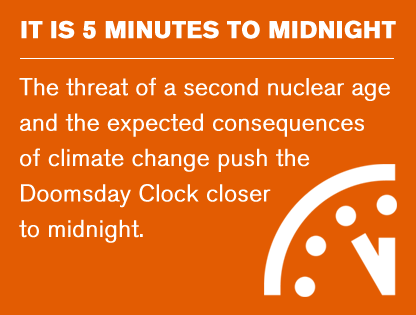
5
Minutes to Midnight
---- Bulletin of the Atomic Scientists, 2007
"As in past deliberations, we
have examined other human-made threats to civilization. We have
concluded that the dangers posed by climate change
are nearly as dire as those posed by nuclear weapons. The effects may
be less dramatic in the short term than the destruction that could be
wrought by nuclear explosions, but over the next three to four decades climate change
could cause drastic harm to the habitats upon which human societies
depend for survival....... This deteriorating state of global affairs
leads the Board of Directors of the Bulletin
of the Atomic Scientists--in consultation with a Board of Sponsors
that includes 18 Nobel laureates--to move the minute hand of the
“Doomsday Clock” from seven to five minutes to midnight";
January 17, 2007.
The Stern Review: The Economics of Climate
Change
Pie chart on greenhouse-gas
emissions in 2000 by source (PDF); Executive
summary (full) (PDF); and Executive summary
(short) (PDF)
Signposts
(with acknowledgements to the Chronicle Herald); November 07, 2002
![[Img-signposts.jpg]](pic/signposts.jpg)
It is an agreement negotiated by more than
160 countries in 1997 to reduce greenhouse gases. Different nations
have different targets but the overall goal is to cut emissions 5.2 %
below 1990 levels by 2012.
What's with the
name?
It's named after the Japanese city where the
negotiations took place. The full name is Kyoto Protocol to the United
Nations Framework Treaty on Climate Change.
What's a
greenhouse gas?
It is an invisible gas that traps heat from
the sun. Without some greenhouse gases, life as we know it could not
exist because the planet would be too cold. The problem is that levels
of such gases have been increasing, upsetting a natural balance in the
atmosphere. Most scientists say this will make Earth's climate warmer.
![[Img-fire.gif]](../../VIEW/ICON/AN/fire.gif)
What's wrong with
warmer temperatures?
Scientists expect more severe weather events
such as droughts, floods, and heat waves; more deaths from heat stress;
flooding and erosion in coastal regions; more forest fires; northward
movement of pests and diseases that
have until now been confined to hot countries; additional stress on
wildlife and on all ecosystems.
Where do
greenhouse gases come from?
The most important one, carbon dioxide, is
produced when fossil fuels such as oil, coal, and natural gas are
burned. Since the beginning of the Industrial Revolution- in the second
half of the 18th century when workers began moving from agriculture to
industry- concentrations of carbon dioxide in the atmosphere have risen
30%.
Do scientists
agree that climate change is a problem?
There are a few skeptics but the great
majority of scientists believe warming due to human activities is
already underway. The Kyoto protocol is a recognition by the world's
major nations that the evidence has become so strong that it can't be
ignored.
![[Img-3dflagsdotcom_canad_medium.gif]](../../VIEW/PIC/AN/3dflagsdotcom_canad_medium.gif)
What would Canada
have to do to fulfill its commitment under the protocol?
Cut emissions 6% from 1990 levels. Since
emissions have risen rapidly since 1990, that means a cut of about 20%
from current levels.
Is it true that
some countries don't have to do anything to cut their emissions?
The treaty is to be implemented in stages.
The first round of cuts applies only to wealthy, developed nations
because they have created the lion's share of the problem. Poor
countries have refused to act until they see solid evidence that the
rich countries are acting. It is hoped that developing countries like
India and China will come on board in the next phase or "commitment
period".
![[Img-bullet_p.gif]](../../VIEW/ICON/bullet_p.gif) Top
Greenhouse Gas Emitters
Top
Greenhouse Gas Emitters
| Country |
Millions of tonnes of
pollutants per year, 1995 |
Percentage of
global total |
| 1. United States |
1,407 |
23 % |
| 2. China |
871 |
14 |
| 3. Russia |
496 |
8 |
| 4. Japan |
308 |
5 |
| 5. India |
248 |
4 |
| 6. Germany |
228 |
4 |
| 7. United Kingdom |
148 |
2 |
| 8. Ukraine |
120 |
2 |
| 9. Canada |
119 |
2 |
| 10. Italy |
112 |
2 |
| 11. South Korea |
102 |
2 |
| 12. Mexico |
98 |
2 |
| 13. France |
93 |
2 |
What if developing
countries don't play ball?
That's a major concern. Most of them are
more concerned with immediate survival issues than climatic change that
is decades away. Rich countries are trying to sweeten the pot by
offering them technical and financial support to cut emissions.
At Climate Meeting, Unlikely
Ally for Have-Nots; November 01, 2002
Proposal to Reduce Greenhouse Gases Loses
Momentum; November 01, 2002
![[Img-smokestacks.jpg]](../../VIEW/ICON/smokestacks.jpg)
How can greenhouse
emissions be cut?
The surest method is to reduce the use of
fossil fuels. That can be done by improving the efficiency of energy
use, and by shifting to alternate fuels such as wind and solar power.
Another part of the solution is to protect "carbon sinks"
such as forests and farmland, which absorb carbon from the atmosphere.
Why is there such
strong opposition to the deal?
Reducing emissions could reduce revenues to
the oil and gas industry, and make it more difficult to develop new
projects. Consumers and all industries would have to change the way
they use energy.
What will it cost
to implement the deal?
Opponents such as the Canadian Manufacturers
and Exporters say compliance could cost 450,000 jobs in manufacturing
alone.
The Suzuki Foundation says there would
actually be new jobs as new technologies developed.
The Government says Canada's economy
would continue to grow but not as fast as it would if nothing were done
to stop emissions.
Would the
agreement do anything to combat smog?
Since fossil fuels are a major source of smog, anything that reduces their use
will also reduce smog.
Have people been
consulted on the protocol?
There have been elaborate consultations with
the provinces, industry and the public over atleast five years!
Kyoto consultations
have cost Canada $22.3m since 1998!
Who supports the
protocol?
Polls suggest that most Canadians in all
provinces with the possible exception of Alberta support the climate
treaty. One recent poll suggested that support in Alberta has fallen
substantially in the past few months.
Does the Federal
Government have a plan to implement the treaty?
Ottawa has put forward a draft proposal
saying it wants to allow for provincial input. Supporters of action on
climate say it is impossible to provide a complete and detailed plan
for a massive effort that is expected to take many years.
Emissions plans lacking: Scientist blasts
Ottawa's tack, says Alberta's proposal weak; November
06, 2002
![[Img-3dflagsdotcom_usa_medium.gif]](../../VIEW/PIC/AN/3dflagsdotcom_usa_medium.gif)
Why did the United
States pull out of the protocol?
President George W. Bush said complying with
the deal would hurt the U.S. economy. It was a dramatic reversal
because the Clinton administration had been a leading advocate of the
protocol.
But the USA was deeply concerned before; December 04, 1997
Anyone else change
their mind?
Australia has also withdrawn.
How important is
Canada's role in Kyoto, since it only accounts for a small percentage
of global emissions?
Canada is seen as having a lot of respect in
the world and its participation could influence other nations. It is
also an advanced country with the capacity to push new technologies.
How does the
treaty come into effect?
When it is ratified by 55 countries which
account for 55% of the emissions addressed by the protocol. So far it
has been ratified by more than 95 countries including all the European
Union members, Japan, and Norway. Russia, New Zealand, and Canada are
expected to ratify soon, bringing the treaty into effect.
Health
Effects
Global warming may fuel northward spread of
viruses; July 22, 1996!
Ratifying Kyoto would save lives, doctors
say; Smog costs Ontario $1b yearly in hospital costs, absenteeism -
study; September 26, 2002
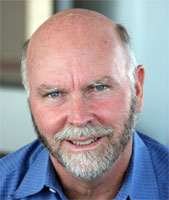
Dr. Craig Venter's energy
institute
is centered on a group of ancient microbes, archea, which inhabit the
deepest parts of the earth and ocean. The archea do not infect humans,
making them safer to manipulate. Dr. Venter said he hoped that they
could be genetically engineered to suck out carbon dioxide from the
atmosphere, relieving the threat of greenhouse warming, and to convert
the gas into hydrogen, a source of nonpolluting energy!
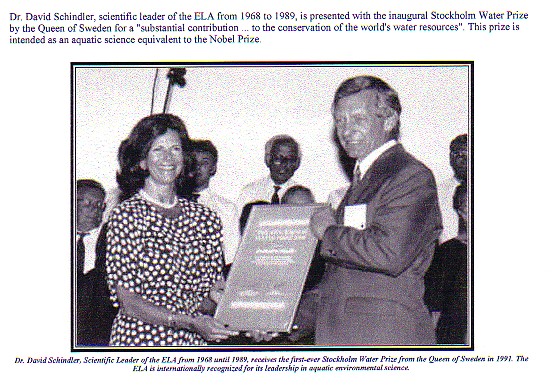
"Canada's
freshwater fisheries dead within 50 years":
David Schindler, the recipient of the
first-ever Stockholm Water
Prize from the Queen of Sweden in 1991; this prize is intended as
an aquatic science equivalent to the Nobel Prize; May 28, 2000
Highlights
of the Federal Action Plan released in October, 2002 (with
acknowledgements to the Chronicle Herald); December 28, 2002:
- Make existing buildings more energy
efficient and set high energy efficiency requirements for new
buildings. Subsidize energy audits for homeowners.
- Increase use of ethanol-blended gasoline. Develop fuel
cell technologies that would run vehicles on hydrogen. Improve
standards for equipment and appliances. Provide incentives for wind
power.
- Negotiate a 25 per cent improvement in the fuel efficiency of new
vehicles by 2010. Improve mass transit and urban planning.
- Limit greenhouse emissions by big industry and let
industry figure out how to do it. Set up an emissions-trading system so
companies have greater flexibility.
- Buy emissions credits on the international market to reduce the
amount we have to cut ourselves.
Global
dimming

We salute the Chebucto
Community Net (CCN) of Halifax, Nova Scotia, Canada for
hosting our web site, and we applaud its volunteers for their devotion
in making `CCN' the best community net in the world
