Disclaimer & Copyright Notices; Optimized for the MS Internet Explorer


Buffer strips
Soil & Water Conservation Society of Metro Halifax (SWCSMH)
July 26, 2006

Contents:
Environment Canada's interim narrative on regression analysis between stream buffer widths and average TN and TP concentrations
![[Img-howell2003_1.jpg]](PIC/howell2003_1.jpg)
![[Img-howell2003_2.jpg]](PIC/howell2003_2.jpg)
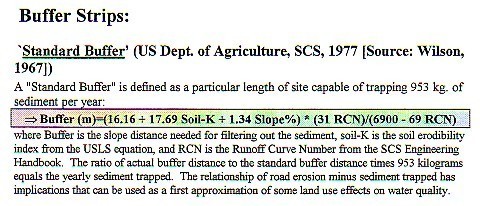
A "Standard Buffer"
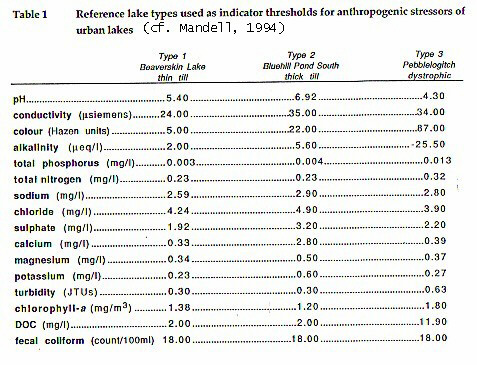
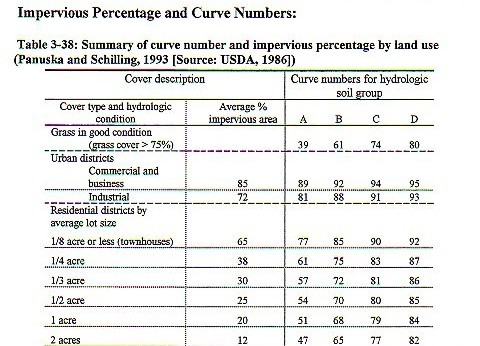
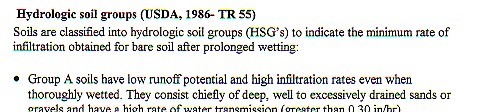
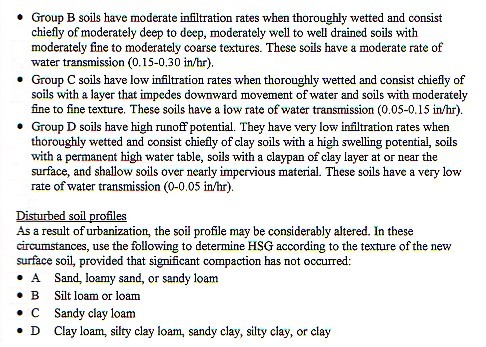
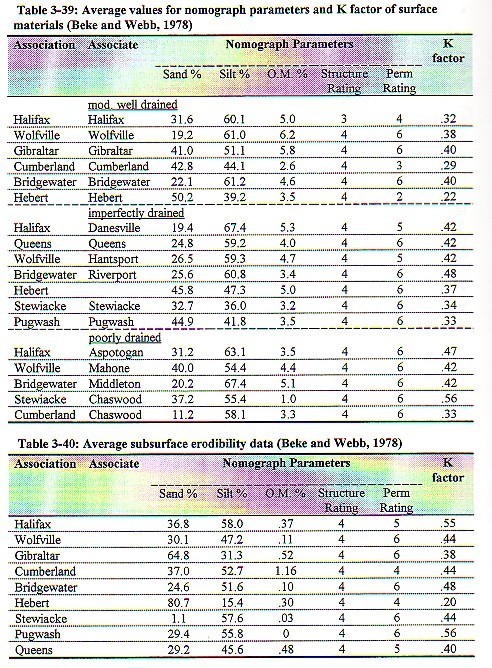
A "Standard Buffer" is defined as a particular length of site capable of trapping 953 kg. of sediment per year (USDA, 1977 [Source: Wilson, 1967]); Summary of curve numbers by land use (Panuska and Schilling, 1993 [Source: USDA, 1986]); Hydrologic soil groups (USDA, 1986); and nomograph parameters values from Nova Scotia (Beke and Webb, 1978)
Hydrogeochemical Responses to Forestry, Hayward-Holmes Watershed, New Brunswick
(Pomeroy et al)
The comparison of data indicates
that minimal response was found in selected treatment. Results indicate
that at least 17% of a watershed can be harvested with no stream
response if a 30 or 60 metre stream buffer remains. The selection
harvest within the buffer did not show a response. The most significant
factor influencing treatment is buffer width, percent area and time
required to re-vegetate. Other responses were due to erosion from road
construction and the use of corrosive metal culverts.
The selection cut must allow sufficient timber to remain to utilize possible enhanced nutrient flux from the adjacent clear cut.
Factors involved in the magnitude of P transfer
(Haygarth, 1997)
- The selectivity of the erosion process
for fine material, since P is associated predominantly with the
clay-size fraction (<2 µm).
- Sorption of P during transport.
- Selectivity of erosion for organic matter or clay minerals which
have a larger surface area and therefore a large capacity to sorb P
during P transport.
- The use of buffer strips and riparian zones are useful, but should not be viewed as the ultimate solution.
3D Animated Flags--By 3DFlags.com

We salute the Chebucto Community Net (CCN) of Halifax, Nova Scotia, Canada for hosting our web site, and we applaud its volunteers for their devotion in making `CCN' the best community net in the world