
Disclaimer & Copyright
Notices; Optimized for the MS Edge
Soil & Water Conservation Society of Metro Halifax (SWCSMH)
Modified: August 03,
2017
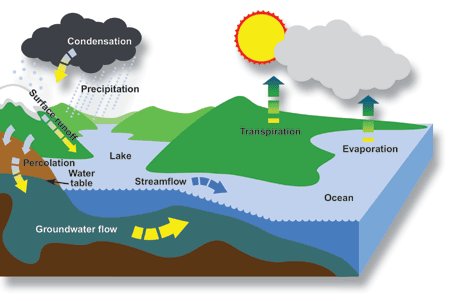
Limnology is a discipline that concerns the study of in-land waters
(both saline and fresh), specifically lakes, ponds and rivers (both natural and
manmade), including their biological, physical, chemical,
and hydrological
aspects.
François-Alphonse Forel (1841-1912) established the field with his studies of Lake Geneva. Limnology traditionally is closely related to hydrobiology, which is concerned with the application of the principles and methods of physics, chemistry, geology, and geography to ecological problems.
![[click on the duck weed picture]](VIEW/PIC/duckweed.jpg) Click on
the picture to take you to an excellent site of John W. Cross PhD —
Click on
the picture to take you to an excellent site of John W. Cross PhD —
"Duckweed refers to species of free-floating, stemless aquatic
plants touted for their uses in waste treatment, animal feed and
pharmaceuticals. Known by botanists under the family of Lemnaceae,
duckweed is believed to be both the world's smallest-flowering and
fastest-growing plant. It grows 20 times faster than corn, doubling in
size within a few days through a natural cloning method. It can tangle
the lines of recreational fishermen casting near duckweed along still,
freshwater areas where the plants thrive. Duckweed can be used to
cleanse wastewater, reducing nitrogen and phosphorous in human waste.
Duckweed produces more protein on average than soybeans. It can also be
used to feed exotic fish being raised for aquaculture."

We salute the Chebucto
Community Net (CCN) of Halifax, Nova Scotia, Canada for
hosting our web site, and we applaud its volunteers for their devotion
in making `CCN' the best community net in the world